
Flat Roofing in the USA
Flat roofs move water through tapered insulation or scuppers rather than steep slopes. Our technicians trace how standing water collects at low spots created by deck deflection or clogged internal drains and then follow the path under the membrane to locate entry points at seams or flashings around HVAC curbs.
Homeowners can first scan the surface from the ground for visible ponding after rain and note any ceiling stains directly below roof drains or vent pipes. These observations help our crews prioritize which areas to measure for moisture during the site visit without requiring the owner to access the roof surface. Calls about flat roofing reach Certified Roofing Contractors from all over the USA.
Visible Indicators of Flat Roof Deterioration
- Bubbles or blisters forming along membrane seams after warm days.
- Water stains on interior ceilings near roof drain locations.
- Curling or separation at perimeter edge metal and flashing joints.
- Vegetation growth in areas where water remains after storms.
- Soft spots in the surface that give under foot pressure near penetrations.
Common Causes of Flat Roof Failures
Ponding water sits on the membrane when drains clog with debris or when the deck slopes less than one quarter inch per foot. Over time this constant moisture softens adhesives and allows ultraviolet light to degrade the top surface layer, creating small cracks that widen with each freeze thaw cycle.
Thermal movement pulls apart seams when the roof expands during heat and contracts overnight. Technicians measure the distance between fixed points such as parapet walls and HVAC units to see whether expansion joints have been properly detailed or if the membrane has been stretched beyond its limit.
Inspection Points on Flat Roof Systems
Our crews walk the entire surface checking every seam for fish mouths or lifted edges while probing the insulation below with a moisture meter at grid points spaced ten feet apart. They also lift cover strips at penetrations to examine the condition of the underlying base flashing and pipe boots.
Drain bowls receive special attention because rust or cracked clamping rings allow water to bypass the membrane. Technicians measure the height of the clamping ring relative to the surrounding roof plane and note whether the drain leader has adequate pitch to carry water away without backup.
Repair Versus Replacement Choices
Small seam failures receive a new cover strip of compatible membrane after the area is cleaned and dried. Larger areas of wet insulation require removal of the affected section down to the deck so new insulation and membrane can be installed with proper slope restored toward the drains.
When multiple layers exist, technicians calculate the total thickness to determine if another recovery membrane can be added or if tear off is necessary to meet current wind uplift requirements. The decision also considers whether the existing deck shows deflection that would continue to create low spots.
Membrane Types and Component Details
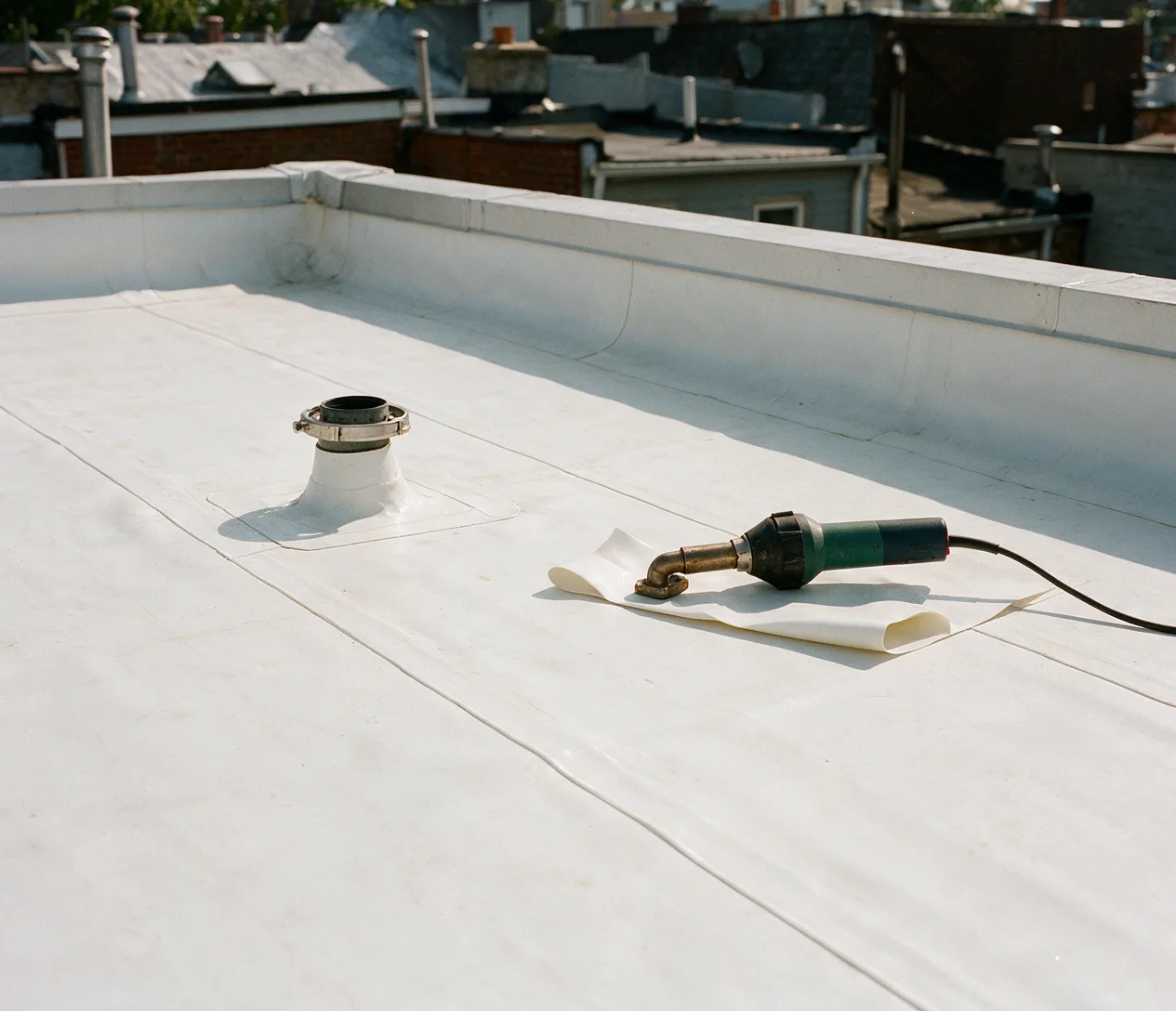
EPDM sheets come in 45 or 60 mil thicknesses and are joined with seam tape or adhesive. TPO and PVC membranes are heat welded at seams and offer different chemical resistance to rooftop exhausts. Modified bitumen sheets are torched or cold applied in two ply systems over a base sheet for added redundancy.
Edge details include termination bars fastened into the wall with countersunk screws and covered by counter flashing. Expansion joints use factory made bellows or field formed curb details that allow movement without stressing the membrane. All penetrations receive pre molded boots or field wrapped flashings sealed at the top with sealant compatible with the membrane.
Flat Roofing questions
How do you locate the source of a leak on a flat roof?
Technicians trace water stains back to the nearest seam, penetration, or drain by removing surface debris and using moisture meters on the insulation. They lift sections of membrane only where readings indicate saturation and mark the exact entry point for repair.
What preparation helps before a flat roof inspection?
Clear leaves and branches from drains and scuppers using a broom from ground level or a ladder positioned on stable surfaces. Note any new interior stains and their locations relative to roof mounted equipment so the crew can focus measurements in those zones.
When is a coating suitable instead of full replacement?
Coatings work when the membrane remains intact without widespread wet insulation and seams show only minor surface cracking. The existing surface must be cleaned of all oxidation and loose material so the coating adheres directly to the original membrane.
How are seams handled during flat roof repairs?
The area around the seam is cut back to sound material, cleaned, and allowed to dry. A new strip of matching membrane is then applied with the appropriate adhesive or weld, extending at least six inches beyond the original seam on each side.
Schedule Flat Roofing Assessment
Contact us to arrange an inspection that maps drainage paths and measures membrane condition across your roof.