Skip to content
Roof Repair across the USA(888) 638-0129

Our roofing services

Roofing assemblies consist of multiple layers that direct water away from the deck. Our technicians trace how each layer meets penetrations, valleys, and eaves so homeowners understand which areas require attention before moisture reaches interior spaces. The approach applies to every service we list on this page.

Different roof types move water differently. Steep slopes shed rain quickly while low-slope surfaces rely on sealed membranes and tapered insulation. We describe the material behavior and common failure points for each system so the correct service can be selected based on visible conditions rather than assumptions. Every service below is available from Certified Roofing Contractors across the USA.

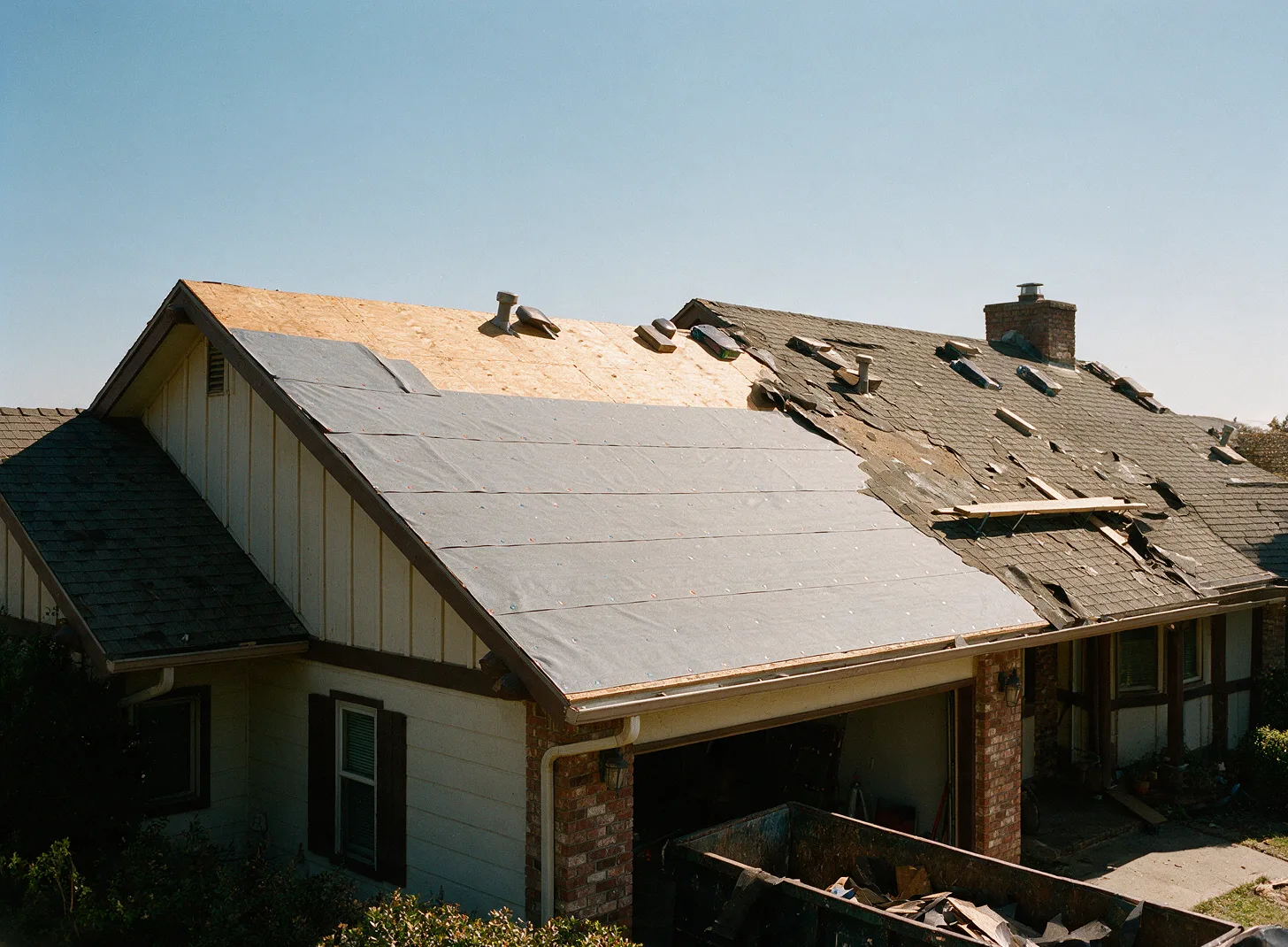
A roof stripped to the deck with new synthetic underlayment going on

Roof Replacement

When multiple layers have reached the end of their service life, removing the existing materials down to the deck allows installation of new underlayment, ice-and-water shield at eaves, and fresh shingles or panels. Proper step flashing at walls and correct nailing patterns prevent water from entering the next time wind-driven rain occurs.
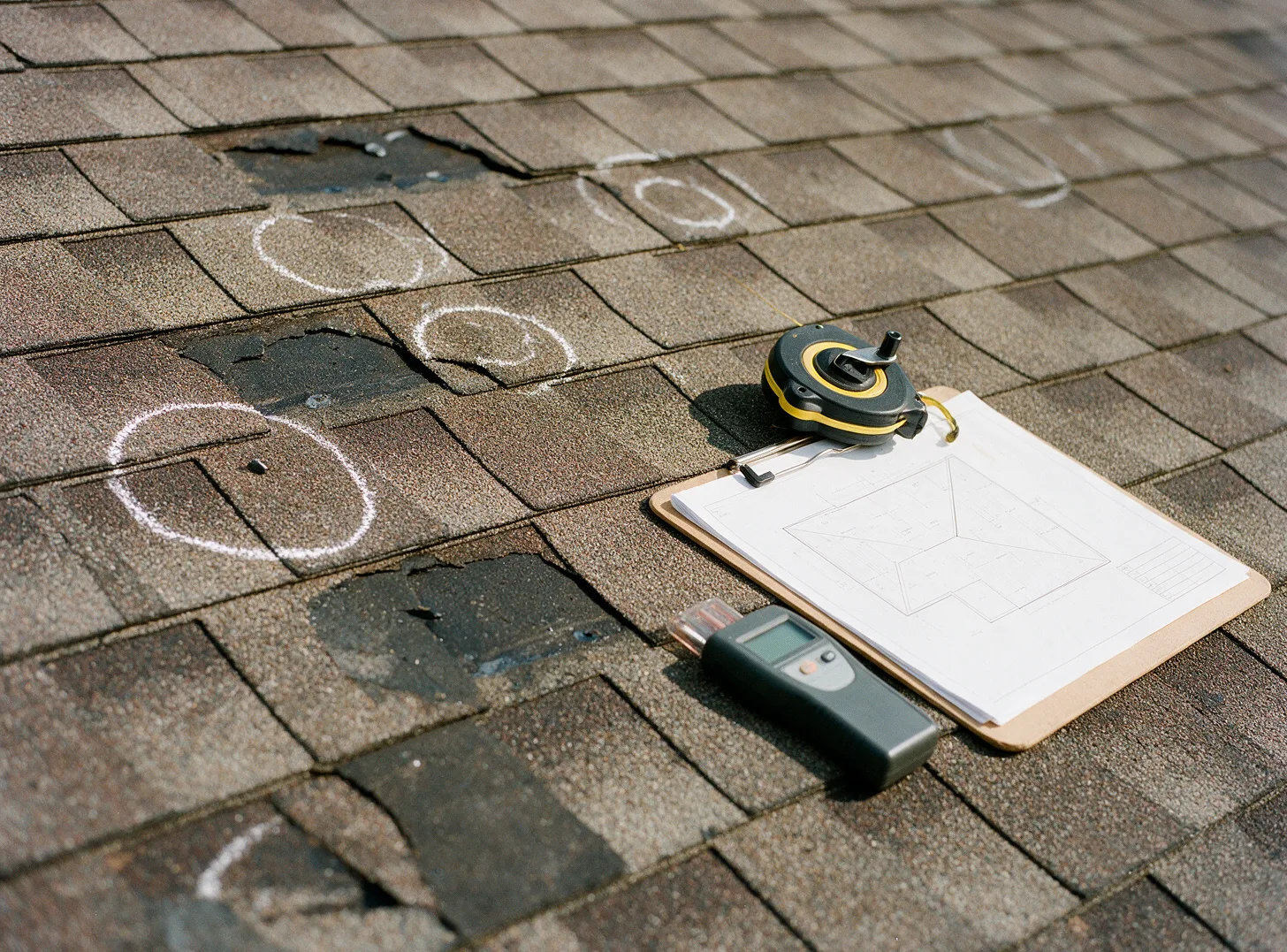
Chalk-circled damaged shingles and an inspection clipboard on a roof

Roof Inspection

Technicians walk the surface and examine attic ventilation, ridge vents, soffit intake, and collar ties around chimneys. They note granule loss, membrane blistering, and fastener back-out so the owner receives a written list of items that need monitoring or correction before leaks develop along seams.

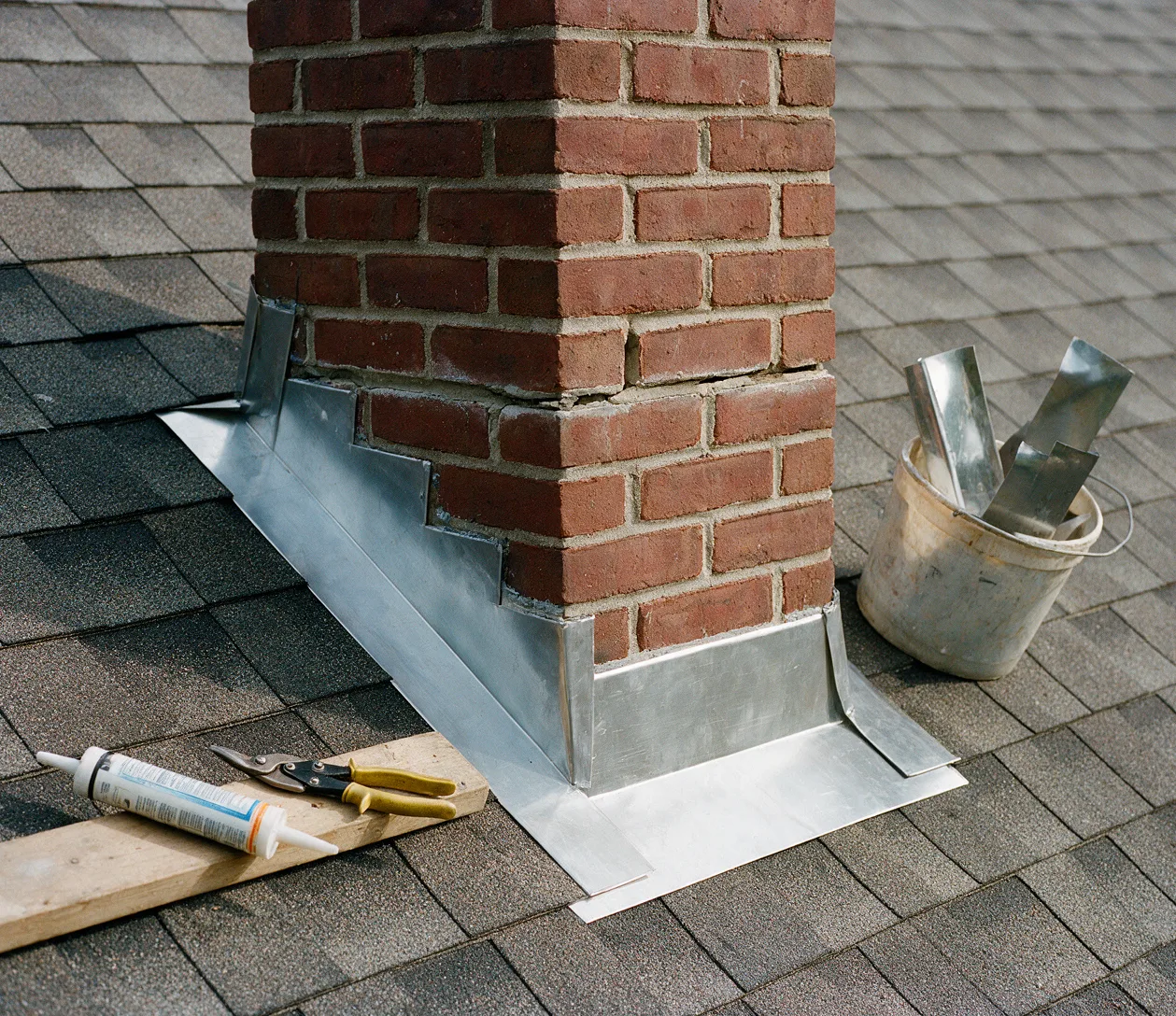
New step and counter flashing around a brick chimney

Roof Leak Repair

Water often travels laterally under shingles or across a membrane before appearing inside. Our technicians lift covering materials at suspect valleys and penetrations, replace damaged underlayment sections, and reseal step flashing without disturbing sound areas farther up the slope.

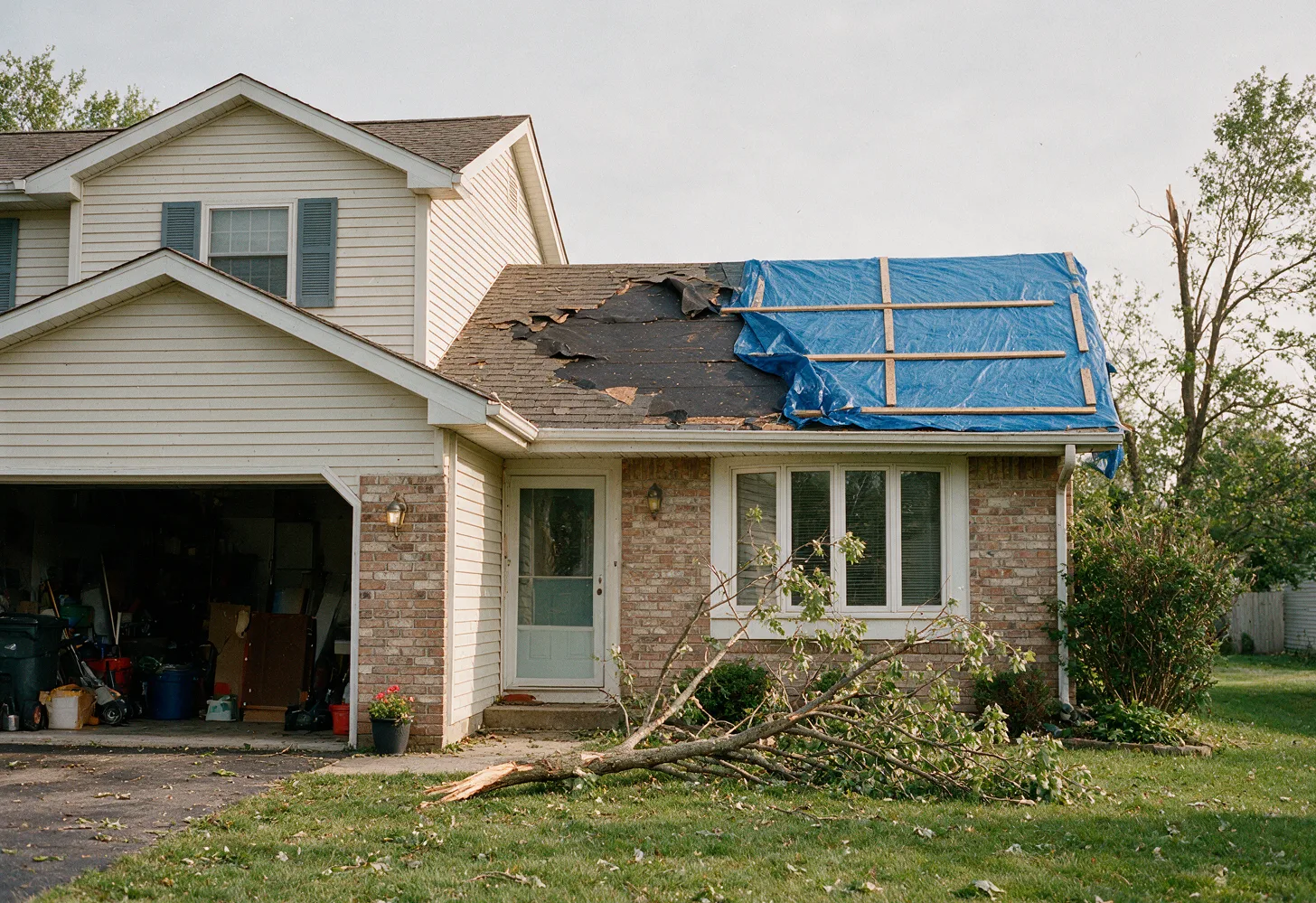
A wind-damaged roof with missing shingles and a blue tarp

Storm Damage Repair

Wind can lift shingle tabs and expose fastener heads while hail fractures the coating on metal panels. We document dent patterns, cracked ridge cap sealant, and displaced ridge vent sections so repairs target only the affected courses rather than the entire surface.

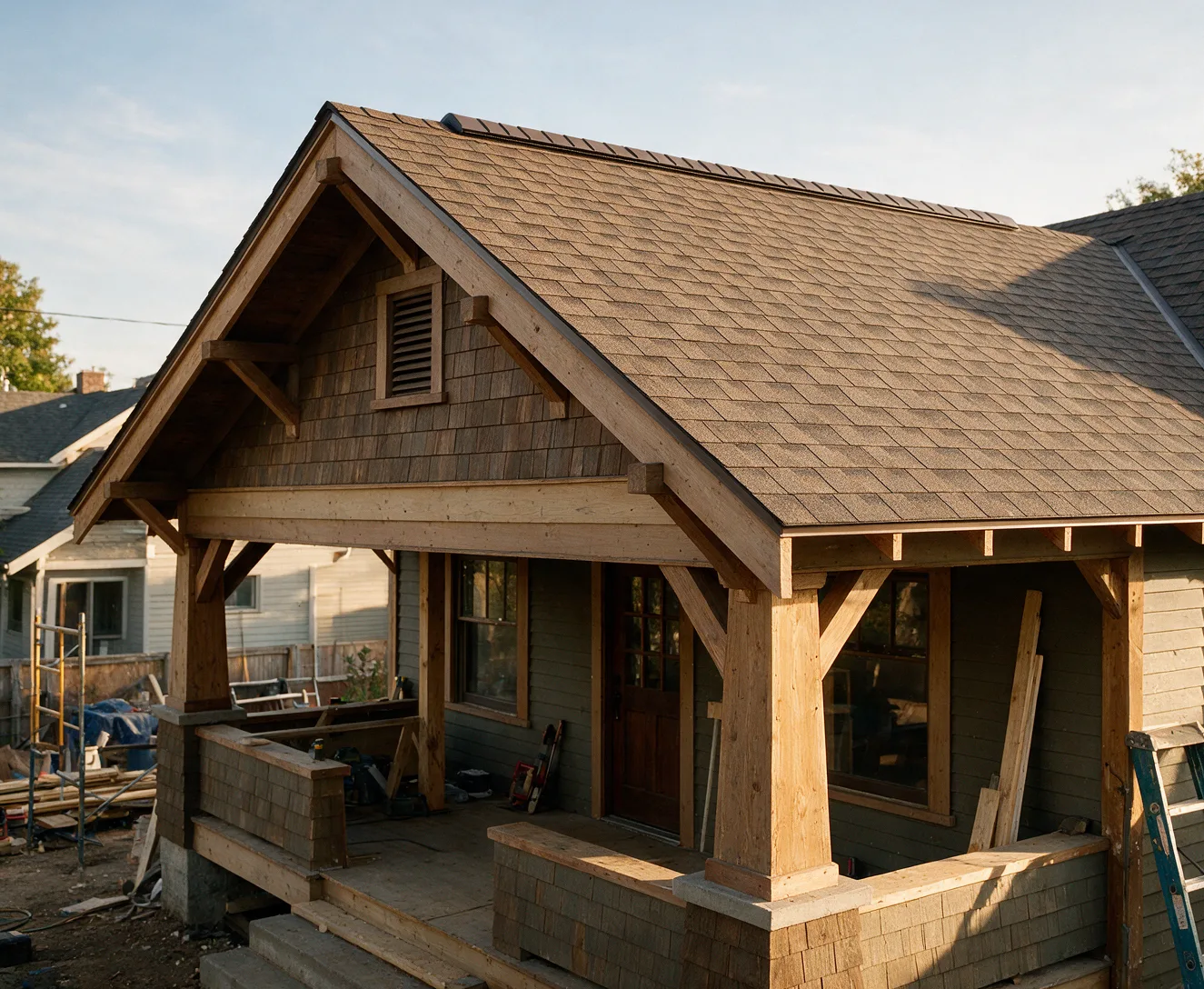
New architectural shingles and a ridge vent on a bungalow roof

Shingle Roofing

Asphalt shingles depend on the overlap of each course and the adhesive strip that bonds to the course below. We check for proper offset at valleys, adequate overhang at the drip edge, and correct exposure so water does not reach the felt or synthetic underlayment during prolonged rain.

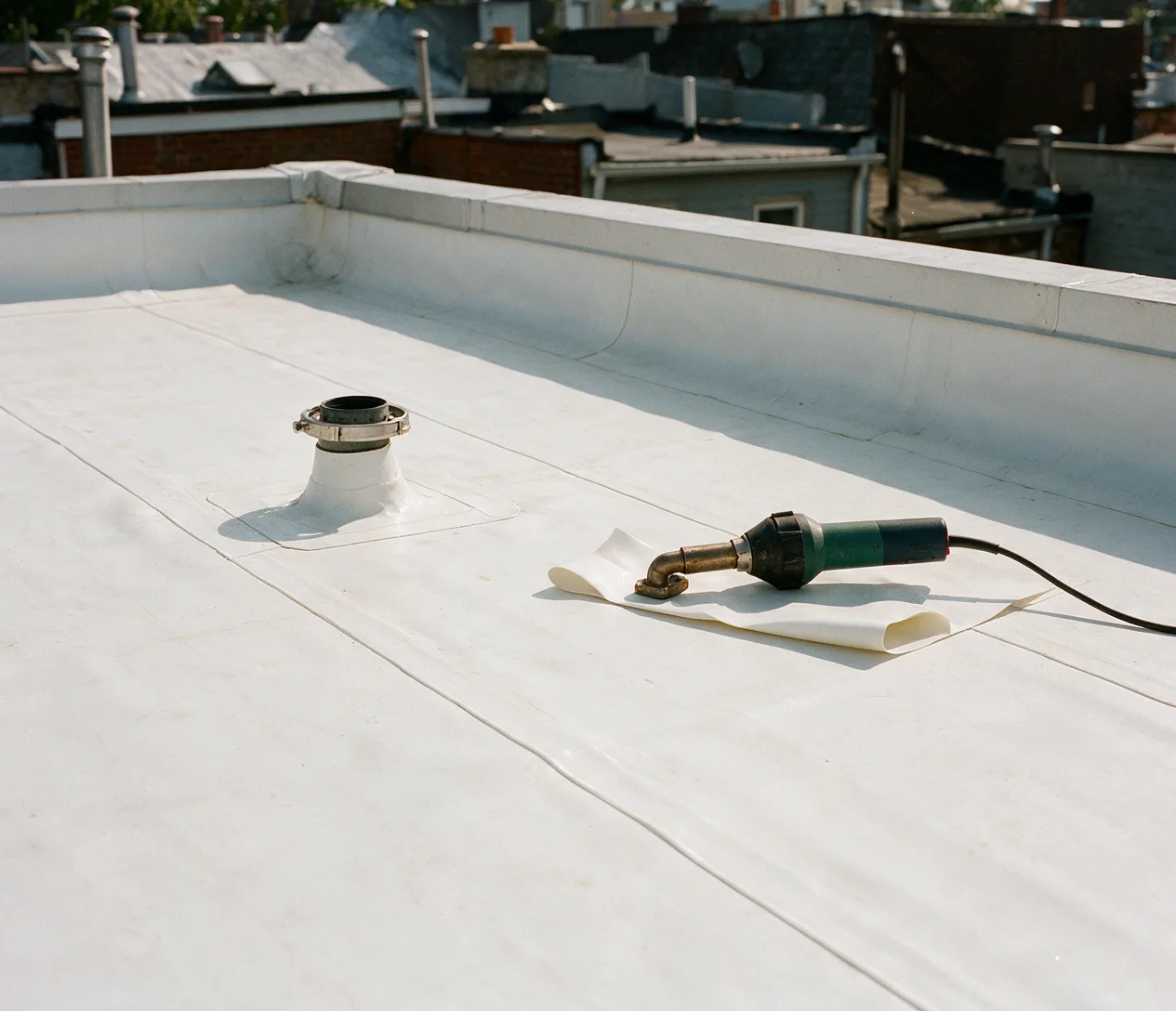
A white TPO membrane flat roof with heat-welded seams

Flat Roofing

Low-slope assemblies use reinforced membranes that must remain watertight at seams, drains, and pitch pockets. Our technicians locate areas where ponding occurs, verify that scuppers and internal drains remain clear, and address edge details where the membrane turns up walls or curbs.

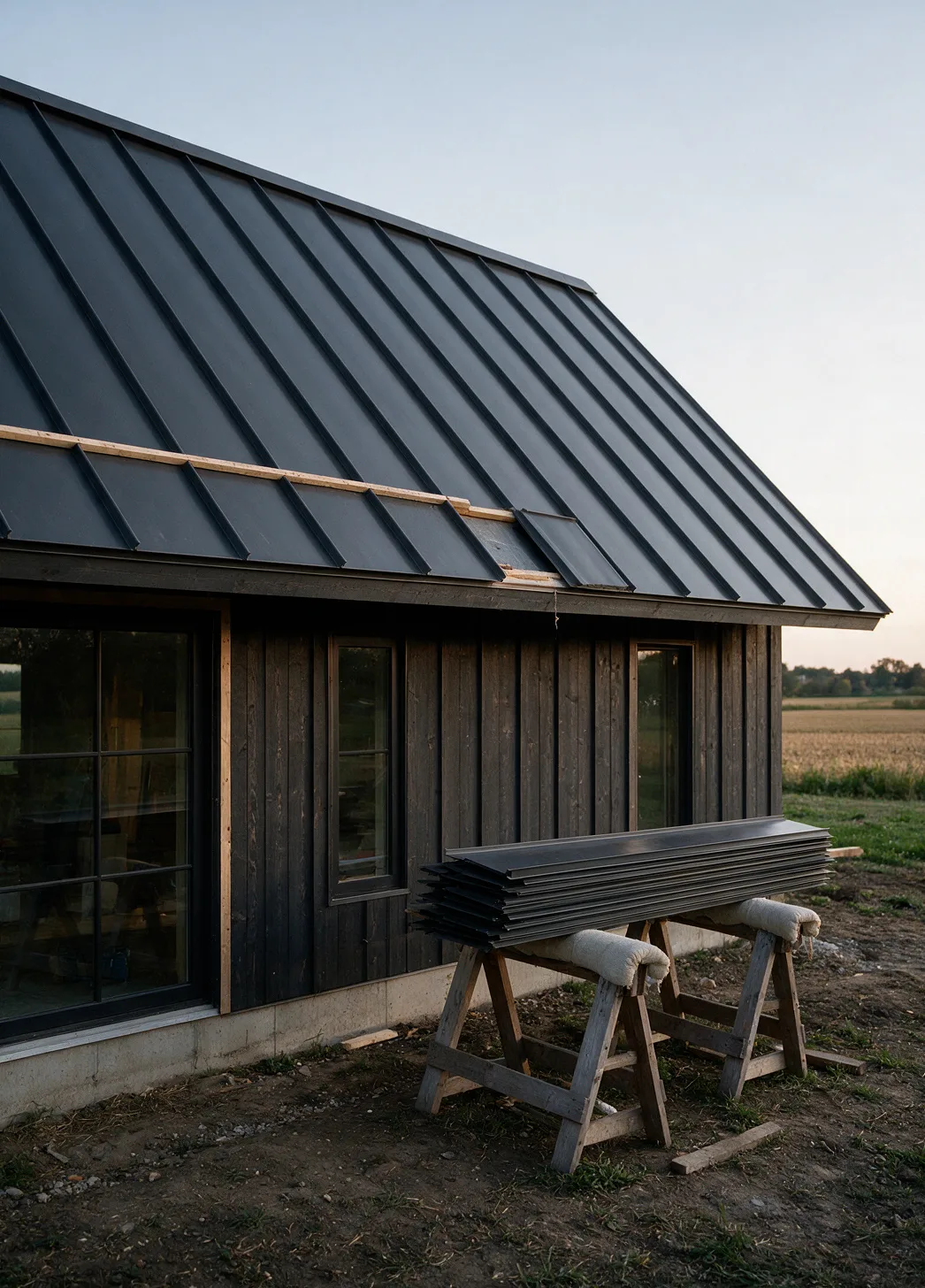
A charcoal standing seam metal roof on a farmhouse

Metal Roofing

Standing-seam and screw-down panels expand and contract with temperature changes. We inspect clip spacing, butyl tape at endlaps, and ridge closures to confirm that thermal movement does not pull fasteners or allow water to enter at the high points of the ribs.

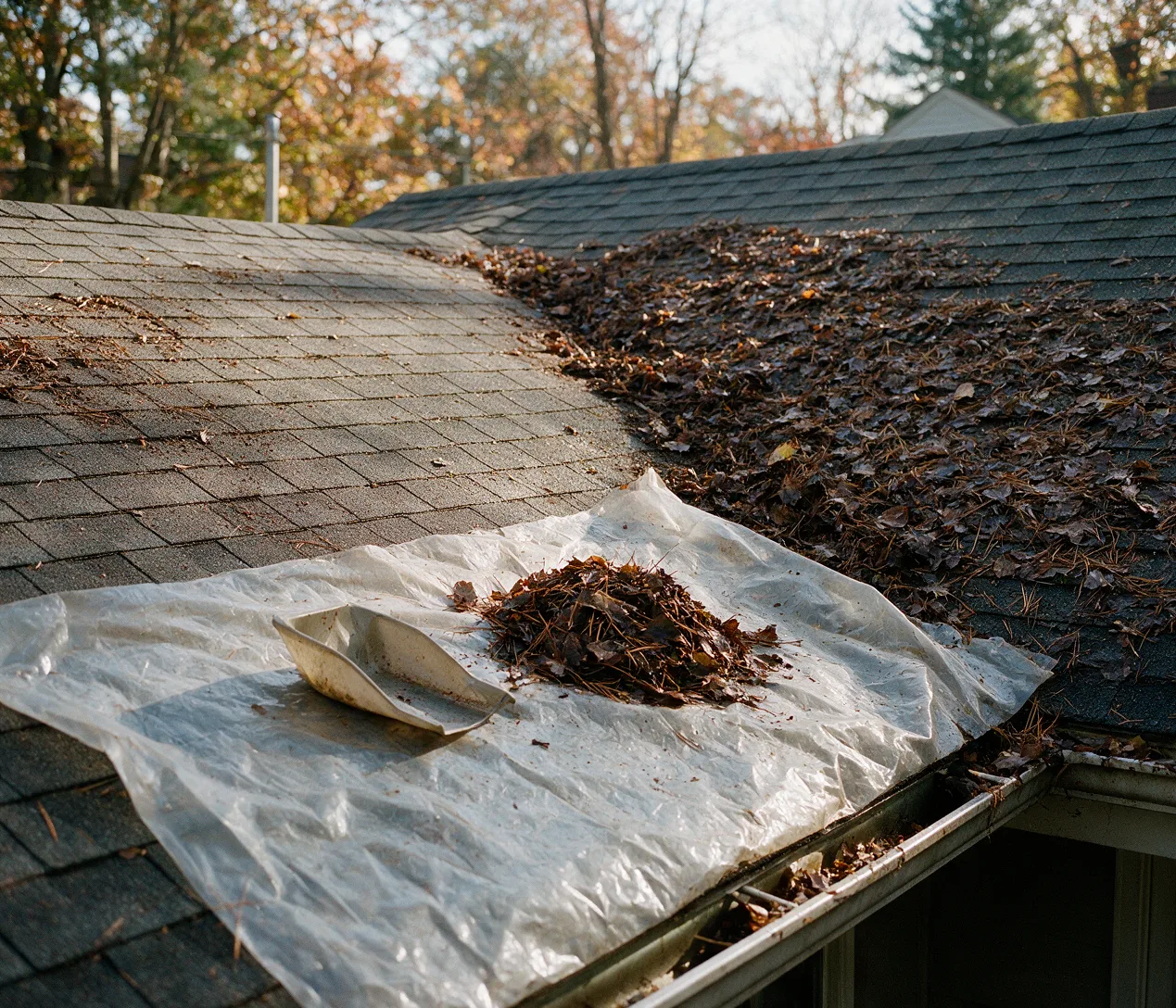
A roof valley being cleared of wet leaves and debris

Roof Maintenance

Seasonal checks include clearing debris from valleys and around drains, tightening loose fasteners on metal panels, and applying compatible sealant at exposed nail heads on shingles. These steps keep existing layers functioning and reduce the chance that small openings enlarge during freeze-thaw cycles.

Selecting the right service

Start by noting whether water is entering the building now or whether the concern is limited to surface wear. Active leaks usually point to leak repair or storm damage repair, while widespread granule loss or curling shingles indicate that replacement or a full inspection may be needed to map the extent of deterioration across layers.

Observe roof slope and material type next. Flat or low-slope surfaces often require membrane evaluation through inspection or maintenance, while steep shingle or metal roofs show different wear patterns that determine whether targeted repair or complete replacement will restore the intended water-shedding path.

Talk to Certified Roofing Contractors

Call (888) 638-0129