
Shingle Roofing in the USA
Shingle Roofing systems rely on overlapping asphalt layers that direct water downslope toward the eaves. Our technicians trace how each course meets the next and check the nail placement depth that holds the tab down against wind lift. Underlayment placement and drip edge positioning determine whether water stays on the surface or finds a path under the deck. We measure ridge ventilation openings to confirm air can exit without pulling moisture back into the attic space.
When sections of the roof show repeated granule shedding or tab curling, technicians isolate whether the cause stems from age, heat buildup, or improper overlap at the valley. Replacement involves removing old courses down to the deck while preserving sound underlayment where possible. New shingles are selected for their weight per square and granule retention rating to match the existing slope and exposure conditions. For shingle roofing, Certified Roofing Contractors works across the USA.
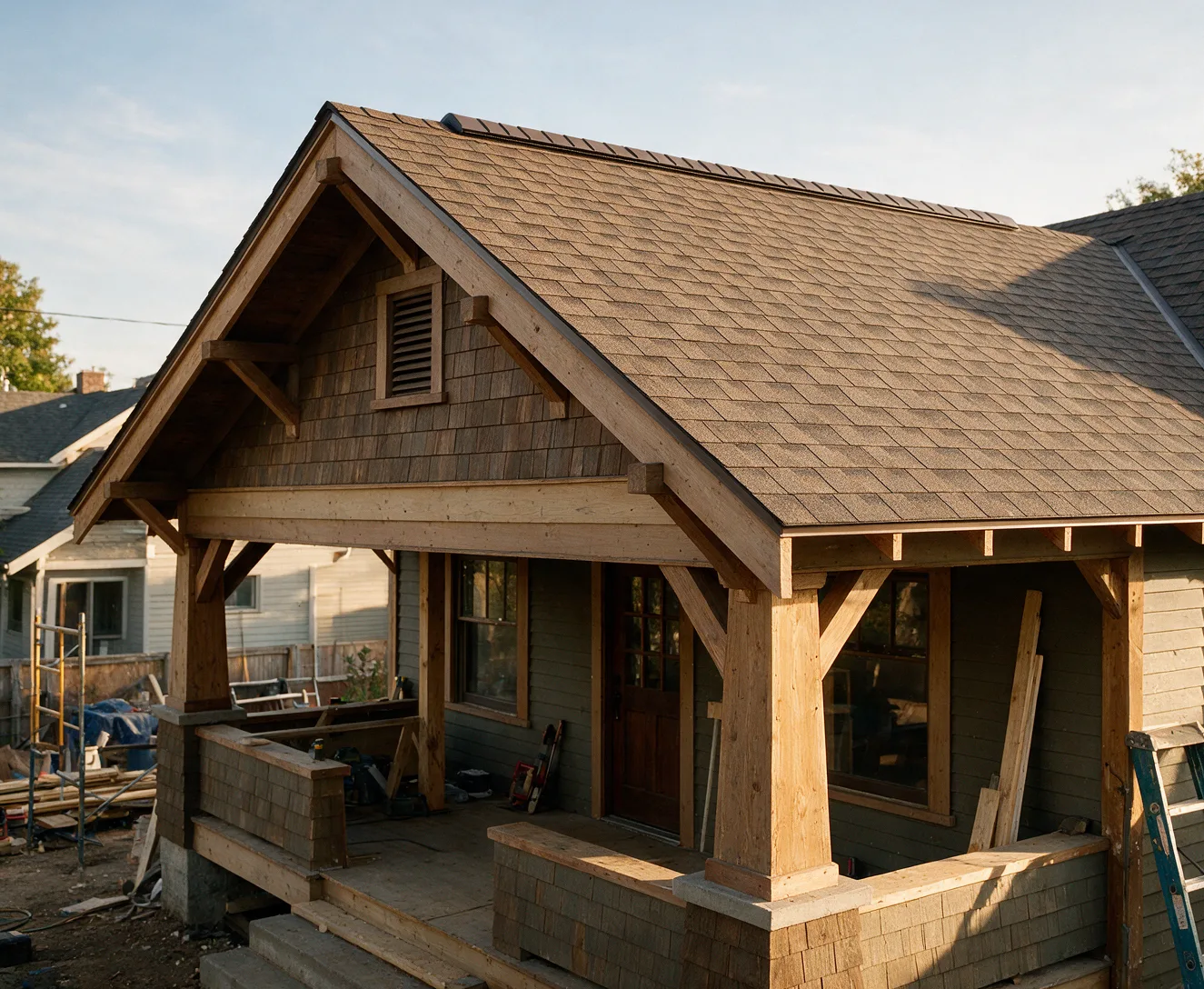
Visible Indicators of Shingle Issues
- Granules accumulate in gutters after heavy rain events.
- Tabs lift at corners exposing the nail heads beneath.
- Dark streaks appear along the lower third of each course.
- Ridge cap shingles separate at the peak joints.
- Water stains form on ceiling drywall below the roof plane.
Technician Inspection Sequence
Our technicians begin at the ridge and work downslope, counting the number of layers present and noting any previous repair patches. They probe the deck firmness around each penetration to locate soft spots where moisture has already reached the sheathing. Flashing at chimneys and sidewalls receives close attention because improper step flashing height allows wind-driven rain to enter behind the shingles.
Ventilation intake at the soffits and exhaust at the ridge are measured to calculate net free area. Imbalanced airflow causes heat to build under the shingles and accelerates adhesive strip failure. The team records shingle manufacturer, weight classification, and color code so replacement bundles match the existing thermal expansion rate.
Measurements of valley metal width and overlap distance help determine if water is channeling correctly or backing up under the courses during heavy flow.
Repair and Replacement Choices
Localized repairs target individual damaged tabs by sliding a new shingle under the course above and securing it with additional fasteners outside the existing nail line. This approach preserves surrounding material when only a small area shows wear. Full replacement occurs when multiple layers have reached maximum recommended thickness or when the deck shows widespread deflection.
Technicians remove old shingles completely rather than layering new ones unless local codes allow a second overlay. Deck inspection follows removal to confirm sheathing can accept new fasteners without splitting. New synthetic underlayment is installed in the valleys and along the eaves before the first course of shingles is set to a chalk line.
Ridge vent sections are reinstalled only after confirming the opening width matches the vent manufacturer's specification for the calculated attic volume.
Material and Fastener Details
Architectural shingles carry a higher weight per square and contain more asphalt than three-tab products, increasing resistance to wind uplift along the exposed edge. Our crews select nails long enough to penetrate the deck by at least three-quarters of an inch while staying within the manufacturer's marked nailing zone. Sealant strips on the back of each shingle activate under sunlight to bond the overlapping tab.
Valley flashing uses preformed metal with a center crease that directs flow away from the joint. Color-matched ridge cap shingles cover the vent opening and maintain the same exposure dimension as the field shingles below. Starter strip material along the eaves includes a factory-applied adhesive that seals the lower edge against wind-driven water entry.
Underlayment rolls are overlapped according to the slope angle so that any water reaching the felt travels downslope without wicking into the deck seams.
Homeowner Preparation Steps
Before technicians arrive, clear attic access points so inspectors can check insulation depth and ventilation baffles without obstruction. Note any interior ceiling stains and mark their locations on a simple diagram to guide the roof-side investigation. Move vehicles away from the drip line to prevent damage from falling debris during removal.
Secure loose items on porches and decks that could be affected by ladder placement. Turn off attic exhaust fans the day prior so negative pressure does not pull granules or dust into living spaces during work. These actions allow the crew to focus on tracing water paths and confirming layer integrity without delays.
Shingle Roofing questions
How do technicians determine if one layer or two must be removed?
They count visible layers at the rake edge and probe deck firmness at multiple points. Two layers already exceed most shingle manufacturer limits, so both are stripped to reach sound sheathing that accepts new fasteners without movement.
What causes granule loss along the lower courses?
Ultraviolet exposure breaks down the asphalt binder that holds granules in place. Heat trapped by insufficient ridge ventilation accelerates this process, and technicians measure net free area to confirm the imbalance before any replacement begins.
Why is step flashing height checked at every sidewall?
Flashing must extend high enough behind the siding to intercept wind-driven rain that travels under the shingles. Low flashing allows water to reach the wall sheathing, and technicians record the existing height before deciding on extension or full replacement.
What determines the nail length selected for new shingles?
Nails must pass through the shingle, underlayment, and at least three-quarters of an inch into the deck. Shorter nails fail to hold during wind events, while excessively long nails can protrude into the attic and create additional leak points.
Shingle Roofing Assessment
Contact us to schedule an inspection of your current shingle layers and ventilation paths.