
Storm Damage Repair in the USA
Storm winds can lift shingle tabs and tear them from their adhesive strips, while hail creates craters that expose the fiberglass mat. Rain then follows these openings downward through the felt layer until it reaches the decking. Our crews begin by walking the slopes to mark every displaced or fractured piece before any interior moisture develops.
Debris carried by gusts often strikes ridge caps and valley metal, bending them away from the roof plane. Once the seal breaks, water travels laterally along the underlayment until it finds a nail hole or seam. Technicians measure the extent of granule loss on each affected course to decide whether section replacement or full course resets will stop further intrusion. Certified Roofing Contractors takes storm damage repair calls from homeowners across the USA.
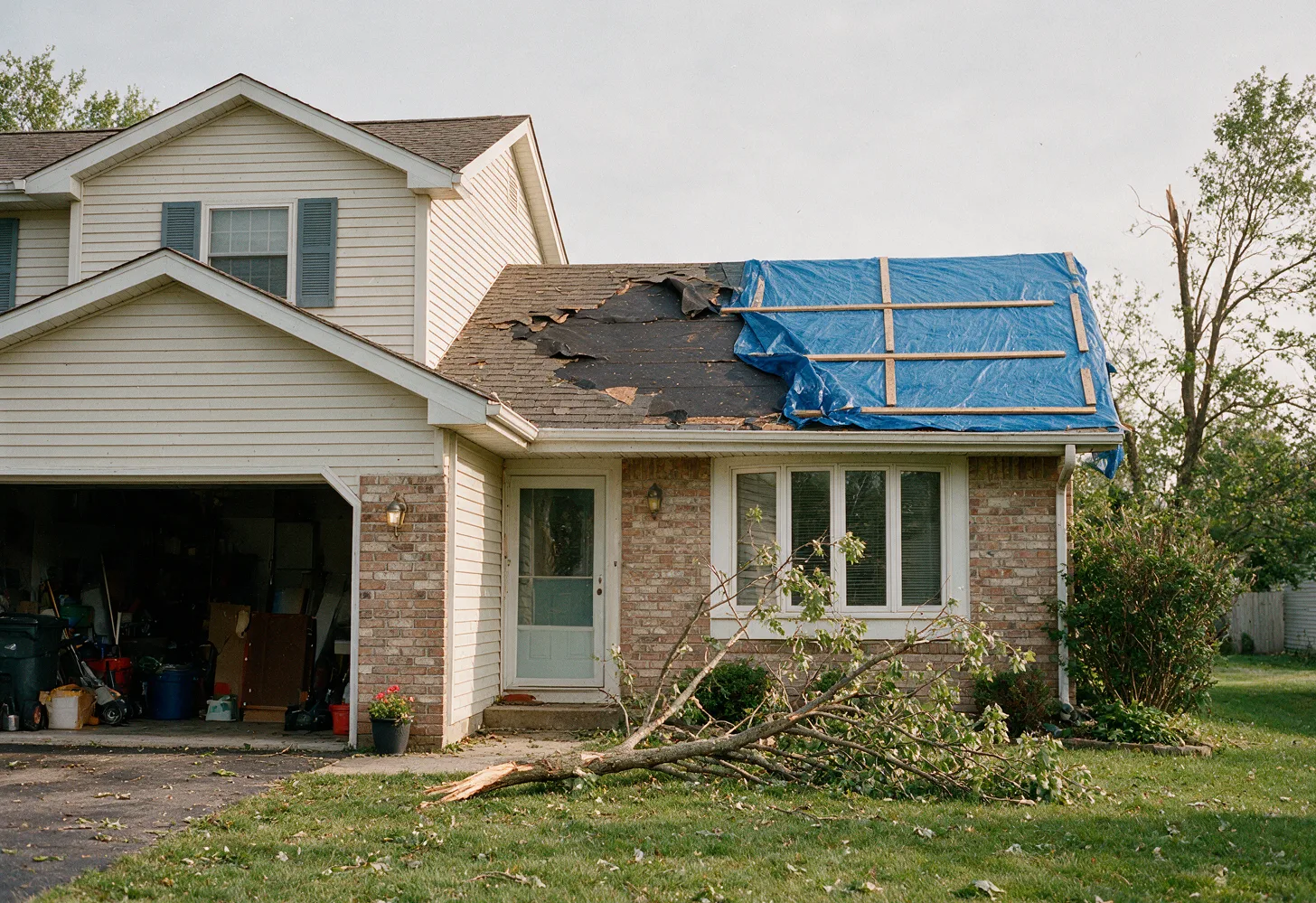
Visible Indicators After Weather Events
- Shingle tabs lifted or missing along the windward edges of each slope.
- Circular dents with cracked granules on asphalt or coated metal surfaces.
- Dark streaks running from ridge to eave that appear only after heavy rain.
- Buckling or soft spots in the deck felt when pressed from the attic side.
- Flashing pulled away from chimneys or walls with daylight visible underneath.
How Technicians Trace Water Intrusion Paths
After a storm our technicians start at the highest point and work downward, lifting each course to check whether the self-seal strip still grips the tab below. They insert a moisture meter into the felt at suspected entry points and record readings to map how far water has traveled laterally between layers.
At valleys and step flashing they remove a single course of shingles to inspect the metal for dents or lifted edges. Any standing water trapped against the deck is noted so the crew can decide if a new piece of ice-and-water shield must be installed beneath the replacement shingles to redirect future flow.
Repair Choices for Different Roof Types
On asphalt shingle roofs damaged by hail we cut out the affected three-tab section back to the nearest full course and install new shingles that match the existing weight and color. The new nails are driven above the seal strip so the tab above can cover the heads and restore the water-shedding plane.
Metal panel roofs require removal of dented sheets only where the coating has cracked through to the steel. Replacement panels are screwed into the existing purlins with butyl tape at every lap to keep water from migrating under the fastener heads during the next heavy downpour.
Materials Used in Targeted Storm Repairs
We carry starter strip, ridge cap, and field shingles that match the existing thickness and wind rating. Synthetic underlayment is used to replace any torn felt because it lies flatter and resists tearing at the edges when wind again loads the slope.
For flashing repairs we use pre-formed step flashing and counterflashing in matching gauge and color. Sealant is applied only at the top edge of the counterflashing so any water that reaches the step can still exit at the bottom rather than being trapped behind a bead of caulk.
First Steps Homeowners Can Take
Document the visible damage with photographs taken from the ground or an upper window before any debris is moved. Note the direction the wind came from and the approximate time the storm passed so the crew can focus inspection on the most exposed slopes.
Place buckets or tarps under any active interior drips to protect finishes, but avoid climbing into the attic if insulation is wet. Wet insulation holds moisture against the deck and can lead to mold, so leave that assessment to the technicians who will decide whether sections need drying or replacement.
Storm Damage Repair questions
How do you determine if the decking needs replacement after hail?
Technicians probe suspect areas with a moisture meter from the attic and lift shingles above any reading above twenty percent. If the plywood shows softness or dark staining from prolonged contact with wet felt, that section is cut out and replaced before new underlayment is installed.
Can only part of a metal roof be repaired after wind damage?
Yes. When wind has lifted only the leading edge of a few panels we remove those sheets, inspect the purlins for twist, and reinstall new panels with fresh butyl tape at every overlap. Adjacent panels remain in place so the repair blends without requiring a full slope replacement.
What underlayment is used when replacing storm-damaged sections?
We install a synthetic underlayment that is fastened with plastic cap nails at the specified spacing. This material lies flatter than felt and does not wrinkle when the replacement shingles are nailed, keeping water from ponding under the new course during the next rain event.
Should gutters be checked during storm damage assessment?
Technicians examine gutters for dents from hail and for debris that may block flow. When downspouts are crushed or separated at joints, water backs up under the eave metal and can enter the fascia or soffit, so these components are documented and repaired as part of the same work order.
Schedule Storm Damage Repair
Contact us to have technicians inspect wind and hail effects and map water paths through the existing layers.